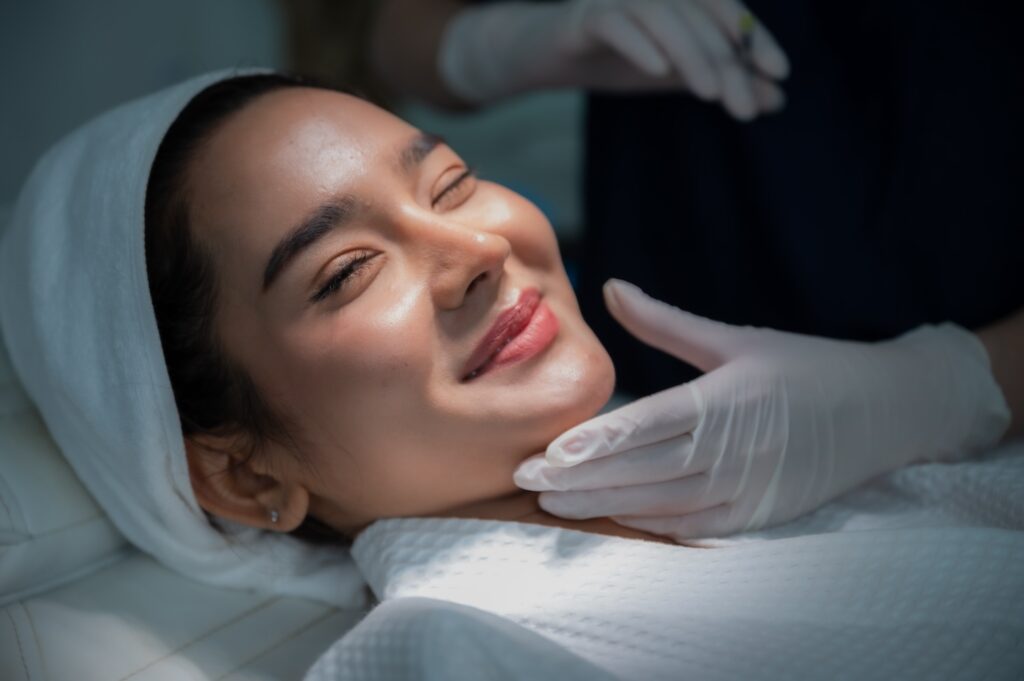
Not sure where to start with your breakouts? An acne facial allows us to assess your skin, identify areas of congestion and inflammation, and customize your treatment based on what your skin actually needs. From professional extractions to LED light therapy, your first facial can be the starting point for a more personalized approach to clearer, healthier skin.
Acne Facial: Why a Customized Facial Can Be the First Step Toward Clearer Skin
When you are dealing with acne, it’s easy to assume the first step is finding the right product. Maybe you need a stronger cleanser, a new serum, or the ingredient everyone on social media is talking about.
Before adding another product to your routine, sometimes the best place to start is understanding what your skin is doing.
An acne facial gives us the opportunity to take a closer look at your skin. We can identify the types of breakouts you are experiencing, assess congestion, and look at the health of your skin barrier. We can also talk through what you are currently using at home.
From there, your treatment can be customized to what your skin actually needs. For some patients, that means focusing on clogged pores and professional extractions. Others may need more help calming inflammation and supporting the skin barrier.
The goal is not simply to leave your facial with glowing skin. It’s to better understand your skin and create a plan for keeping it healthier long after you leave the treatment room.
What Is an Acne Facial?
An acne facial is a professional facial customized for acne prone, congested, or breakout prone skin.
Unlike a traditional facial that may follow the same basic steps for every patient, this treatment is based on what is happening with your skin that day.
Breakouts do not look the same on everyone. One patient may have mostly blackheads and closed comedones. Another may have papules, pustules, or recurring hormonal breakouts. Some patients have a combination of active breakouts, dehydration, sensitivity, and post inflammatory hyperpigmentation.
Those patients should not necessarily receive the same facial.
This is why I consider the assessment just as important as the treatment itself.
Why I Like Starting With a Facial
When someone is struggling with breakouts and unsure what to do next, a customized facial can be a great place to start.
Seeing and feeling the skin in person gives me information that is difficult to get from a description alone. I can look at where your breakouts are occurring, the types of blemishes present, and how much congestion there is. I also assess whether your skin appears oily, dehydrated, sensitive, or irritated.
We can then talk about your current routine. Are you exfoliating? Using a retinoid? Layering several acne treatments? Are you moisturizing and wearing sunscreen every day?
Sometimes a patient doesn’t need more products. They simply need the right products, used in the right way.
All of this helps me customize your facial and decide what your skin may need next.
Your Acne Facial Starts With an Assessment
Before treating the skin, I want to understand it.
One of the first things I look at is the type of breakout present. Blackheads, closed comedones, papules, pustules, nodules, and cystic breakouts behave differently. Therefore, they should not all be treated the same way.
I also look beyond the blemishes themselves.
Is there visible redness or inflammation? Does your skin look dehydrated despite producing excess oil? Is there flaking around active breakouts? Does your skin sting easily? I also look for signs of a weakened skin barrier from over exfoliation or too many active ingredients.
This matters because aggressive treatment is not always a better treatment.
If your skin is already irritated from acids, scrubs, retinoids, benzoyl peroxide, and spot treatments, adding more exfoliation may only make things worse.
Some patients need help clearing congestion, while others need help calming inflammation. If the skin barrier is compromised, supporting is the first step.
That is the benefit of customization.
What to Expect at Your First Acne Facial
Your first acne facial starts with a closer look at your skin and a conversation about your concerns, routine, and goals. I then customize the treatment based on what your skin needs that day.
Your treatment may include professional extractions, dermaplaning when appropriate, and LED light therapy.
This first appointment also gives us a starting point. We can see how your skin responds and identify areas of congestion or inflammation. From there, we can decide whether continued facials, changes to home care, or another professional treatment may be beneficial.
Professional Extractions for Clogged Pores
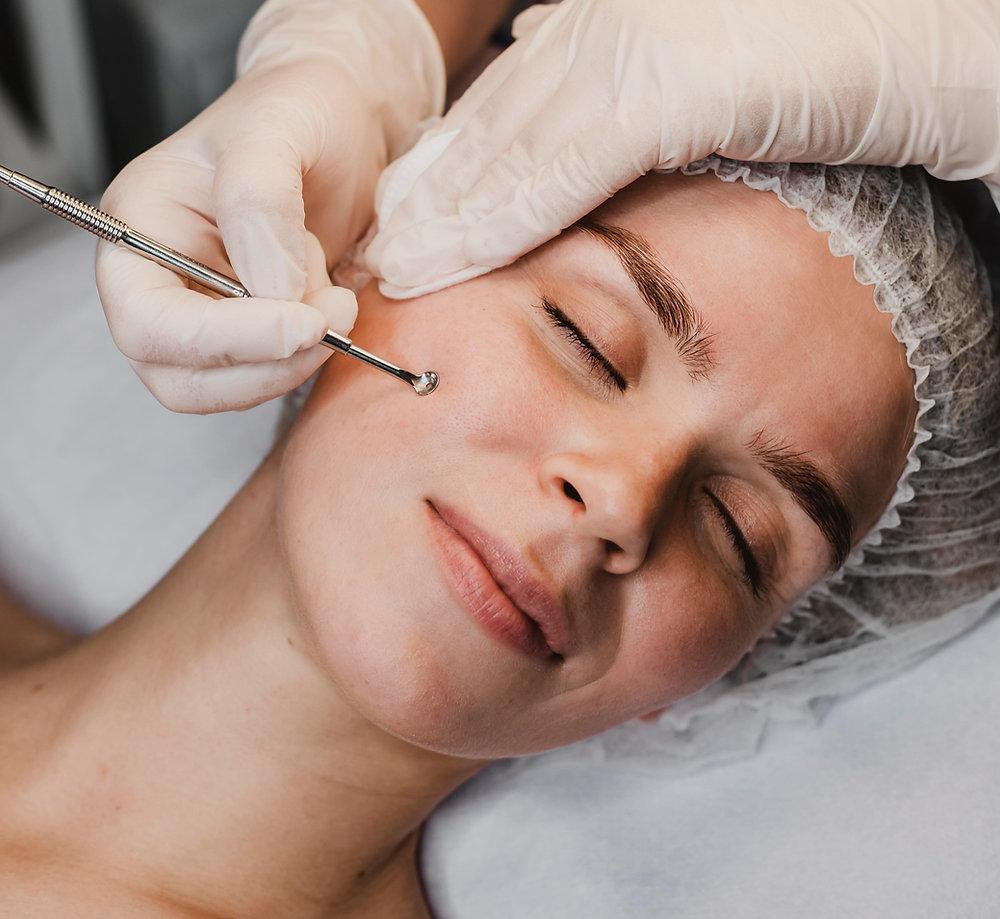
Extractions are one reason acne prone patients may benefit from a professional facial. They can be especially helpful when blackheads and certain closed comedones are present.
A professional extraction involves carefully removing buildup from an appropriate clogged pore using proper technique.
The important word here is appropriate.
Not every bump should be extracted.
Blackheads and certain closed comedones typically respond well to professional extraction. Deep papules, nodules, cysts, and other inflamed lesions should never be squeezed.
Trying to force an inflamed breakout to pop can cause more trauma beneath the skin. It can also increase inflammation and is at a higher risk of post inflammatory hyperpigmentation or scarring.
This is why I discourage patients from picking their skin at home.
It can be tempting when you can see or feel a clogged pore. However, there is a big difference between a professional extraction and repeatedly squeezing a breakout in the bathroom mirror.
Extractions can help clear existing congestion, but they’re only one part of managing breakouts. If we don’t address why your pores are becoming clogged, the congestion can return.
Dermaplaning and Acne Prone Skin
Dermaplaning can be incorporated into some customized facials. Whether I recommend it depends on the condition of your skin.
During dermaplaning, a sterile surgical blade gently removes surface dead skin cells and vellus hair. The treatment can leave the skin feeling smoother and improve the appearance of dull or uneven texture.
It may be beneficial for acne prone patients dealing with surface buildup or uneven texture without significant active inflammation.
However, I would not dermaplane directly over areas of active, inflamed acne.
This is another reason every facial should not be treated the same way. What benefits one acne prone patient may not be appropriate for another.
Your skin should determine the treatment.
LED Light Therapy for Breakout Prone Skin
LED light therapy may also be incorporated into an acne facial depending on your skin’s needs.
Different wavelengths of LED light are used for different concerns. Blue light is commonly used for acne prone skin to target acne related bacteria. Red light can help calm inflammation and support the skin’s natural healing response.
LED is noninvasive and does not require aggressive exfoliation. This can make it a helpful addition when the skin needs support without unnecessary irritation.
LED is not a replacement for a consistent home routine or medical treatment when more severe acne is present. Instead, it can be one part of a larger treatment plan.
What an Acne Facial Cannot Do
Professional facials can be helpful, but they are not a cure for every form of acne.
A facial can clear appropriate congestion, support the skin barrier, reduce surface buildup, and help calm the skin. It also gives us valuable information about what your skin needs.
However, a facial cannot always address the underlying cause of your breakouts.
Hormones, genetics, medications, medical conditions, and other internal factors may contribute to acne. Deep nodular or cystic breakouts may require evaluation and treatment from a medical provider or dermatologist.
If I believe your skin needs more than esthetic treatment can provide, I would rather tell you. Continuing to perform facials without addressing the source of the problem is not the goal.
Professional treatments work best when we understand where they fit into the bigger picture.
The Facial Is Only the Beginning
You can have a great facial, clear appropriate congestion, and leave with your skin looking and feeling better. What happens between appointments matters just as much.
That is why I like using the facial as a starting point.
Once I have assessed your skin and seen how it responds, we can decide what it may need at home. The goal is not to send you home with ten new products. It is to make sure your routine supports the progress we are trying to make.
What Happens After Your Acne Facial?
Home care plays an important role in maintaining your results. After assessing your skin, we may make a few changes to your current routine or recommend specific products when appropriate.
This does not mean starting several new active ingredients at once. Your routine should make sense for your skin, type of breakouts, and tolerance.
Medical grade skincare deserves its own conversation, especially when treating acne. In our medical grade skincare guide, we take a closer look at ingredients, how they work, and how to build an effective routine without overwhelming your skin.
How I Customize a Facial for Acne Prone Skin
There is no single facial protocol that every acne prone patient needs. What I choose during your appointment depends on what I see when I assess your skin.
If blackheads and closed comedones are the main concern, we may focus more on preparing the skin and performing extractions. When the skin is inflamed or sensitive, calming treatments and LED may be more appropriate.
Dermaplaning can be beneficial for surface buildup and uneven texture when the skin is a good candidate. However, I avoid treating directly over significant active inflammation.
Even two appointments for the same patient may look different. Your skin can change with hormones, weather, stress, medications, home care, and treatment progress.
A customized facial allows the treatment to make sense for the skin in front of me that day.
How Often Should You Get an Acne Facial?
There is not one schedule that works for everyone.
Treatment frequency depends on your type of breakouts, level of congestion, skin sensitivity, home routine, and how your skin responds.
Some patients may initially benefit from more consistent treatments while we work on congestion. Once the skin becomes more stable, appointments may shift toward maintenance.
I prefer to base treatment frequency on what your skin needs rather than automatically recommending a facial every four weeks.
The goal is progress, not simply staying on a schedule.
What Should You Do Between Facials?
What you do between appointments plays an important role in maintaining your results.
Avoid picking or squeezing breakouts at home. Stay consistent with the routine recommended for your skin and give it time to respond. Constantly adding or changing products can make it harder to know what is actually working.
As your skin improves, its needs may change. We can adjust your treatments and home care along the way. Eventually, the goal can shift from clearing active concerns to maintaining healthier, more balanced skin.
When a Facial Is Not Enough
If your acne is deep, painful, cystic, nodular, suddenly worsening, or leaving scars, a facial should not be your only treatment.
This is when I recommend involving an appropriate medical provider or dermatologist.
Prescription treatment may be necessary for certain types of acne, especially when hormones or significant inflammation are involved. The right option depends on the patient and the type of breakout.
That does not necessarily mean professional esthetic care has to stop. Facials, home care, and medical treatment can often complement one another when coordinated appropriately.
The goal is always to do what is best for your skin, even when a facial alone is not the answer.
What Happens Once Your Skin Clears?
Getting clear is exciting, but maintaining those results is where consistency matters.
One common mistake is stopping everything as soon as the breakouts improve. Many products used for acne help prevent new congestion before you ever see a blemish on the surface.
Once your skin improves, we may adjust your routine rather than completely stop it. Maintenance can also include professional facials when beneficial and changes to your routine as your skin evolves.
Skin changes with age, hormones, seasons, stress, and lifestyle. Your treatment plan can change with it.
Why Personalized Acne Care Matters
There is an overwhelming amount of skincare information available today. Search for one ingredient and you may find hundreds of videos telling you why you need it. Another hundred may tell you to avoid it completely.
The problem is that none of those videos are looking at your skin.
That is one reason I value starting with a professional skin assessment. Instead of guessing or buying another product because it worked for someone else, we can look at what is actually happening.
Extractions may be appropriate for one patient, while another benefits more from LED. Dermaplaning may work well for certain concerns but should be avoided in others. Sometimes we need to add something to your routine. Other times, taking a few things away is the better choice.
Customized skincare is not about doing the most. It is about doing what makes sense for your skin.
Start With Your Skin
If you are struggling with breakouts and do not know where to begin, an acne facial can be a great starting point.
It gives us the opportunity to assess your skin, address appropriate congestion with professional extractions, and determine what your skin may need moving forward.
At 817 Surgical Arts, my goal as a medical esthetician is not to simply perform a facial and send you on your way. I want you to leave understanding your skin a little better than when you came in.
The facial itself is one appointment. What we learn from your skin during that visit can help guide how you care for it every day afterward.
Clearer skin is not about finding one perfect product or treatment. It comes from understanding what your skin needs, staying consistent, and knowing when it is time to adjust the plan.