As women age, they begin to notice changes in their skin before they even begin menopause. The skin becomes more dry and thin, and their once plump skin becomes less firm. They’re even more prone to fine lines and pigmentation. Using the same products and routines that have worked for years stops working as effectively.
The reason? Hormonal changes.
As estrogen levels begin to decline during perimenopause and menopause, the skin undergoes significant structural changes that affect hydration, collagen production, elasticity, and overall skin quality. Understanding these changes can help you choose skincare that supports your skin during this new phase of life.
What Is menopause?
Perimenopause is the transitional period leading up to menopause when hormone levels begin to fluctuate and gradually decline. Most women begin experiencing perimenopausal changes in their 40s, though some notice symptoms as early as their mid-30s. This phase may last several years before menopause officially occurs.
Menopause is the lack of a menstrual period for 12 consecutive months and on average occurs around age 51. Menopause symptoms often include hot flashes, irregular or missed periods, and mood changes as well as noticeable changes in the skin.
How does Estrogen Affect the Skin?
Estrogen plays a critical role in maintaining healthy, youthful skin because it supports:
- Collagen production
- Hyaluronic acid levels
- Skin thickness
- Elasticity
- Moisture retention
- Wound healing
- Overall skin barrier function
As estrogen declines, we see these processes become less efficient.
Research has shown that women can lose up to 30% of their skin’s collagen within the first 5 years after menopause. The result is skin that may appear thinner, drier, less resilient, and more prone to wrinkling.
Many women notice:
- Increased dryness
- Fine lines and wrinkles
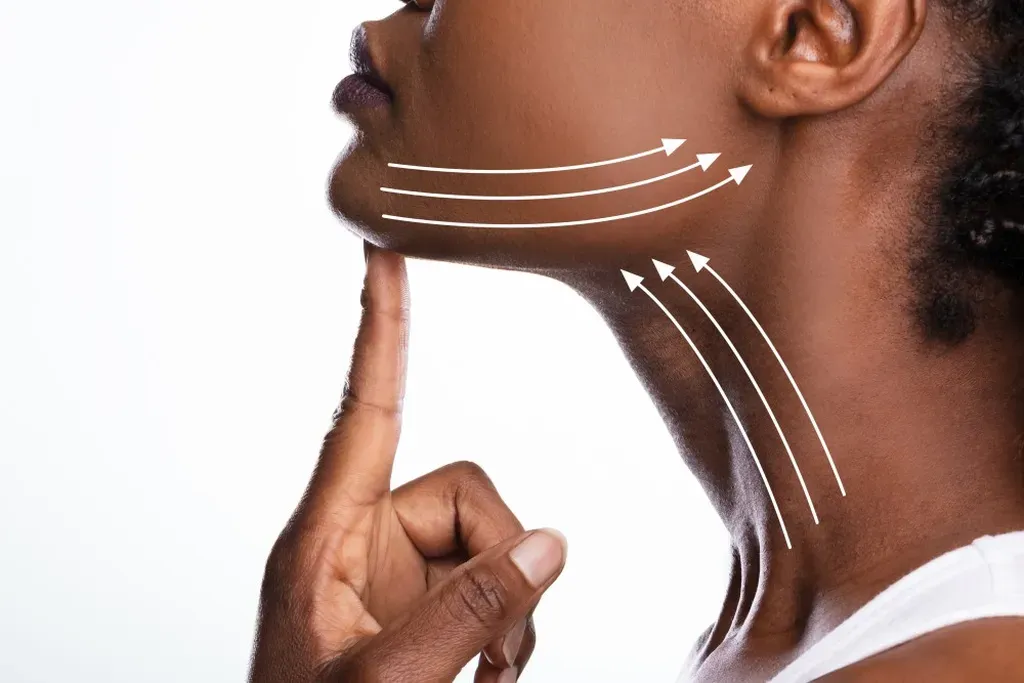
- Crepey skin, particularly around the eyes and neck
- Loss of facial volume
- Reduced firmness and elasticity
- Increased skin sensitivity
- More visible pigmentation and sun damage
- Slower healing and recovery
Fortunately, a thoughtful skincare routine can help support skin health and address many of these concerns.
Five Skincare Ingredients Every Woman Needs During Perimenopause and Menopause
1. Daily SPF: The Most Important Anti-Aging Product
If there is one product that belongs in every skincare routine, it is sunscreen. Ultraviolet (UV) radiation is responsible for the majority of visible skin aging, often called “photoaging.” The effects of UV radiation include:
- Fine lines and wrinkles
- Pigmentation and age spots
- Collagen breakdown
- Loss of elasticity
- Rough skin texture
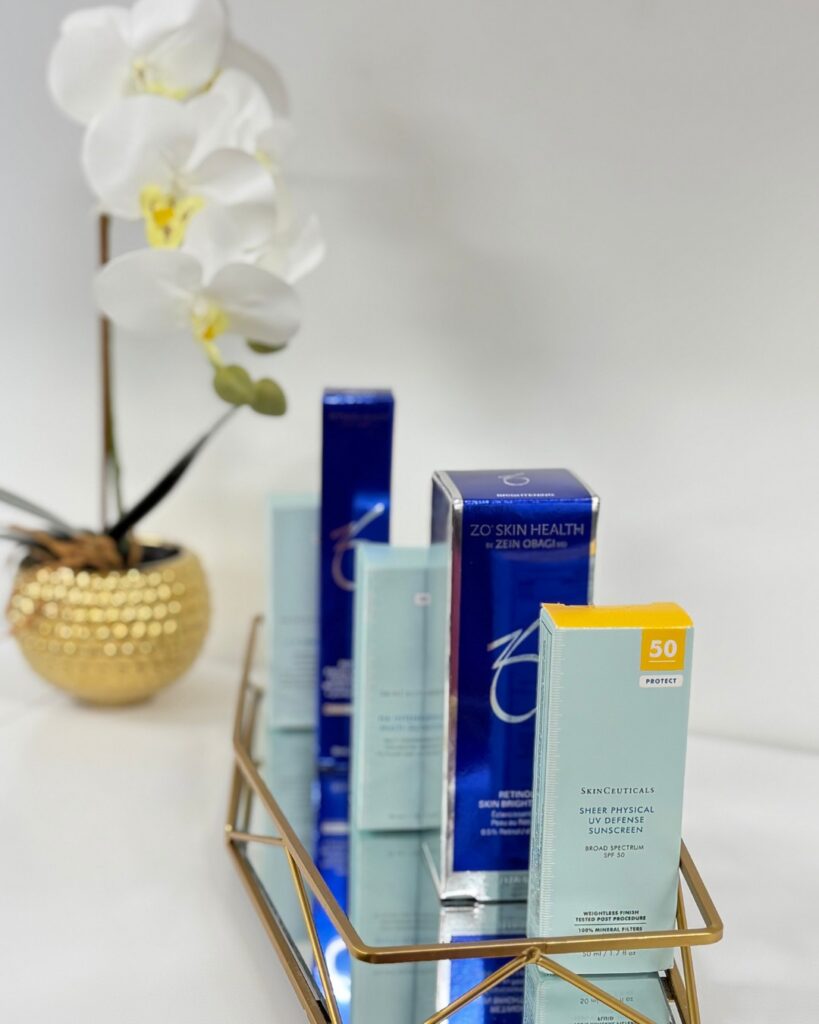
As estrogen declines during menopause, so does collagen production. It is important to protect the collagen that exists. Choosing a broad-spectrum SPF 50 and applying it daily is imperative. Studies show that SPF also becomes less effective with time, so it’s also important to remember to reapply every 2 hours. UV exposure occurs year-round and penetrates through clouds and windows. Wearing a good bread-spectrum SPF daily will help prevent those damaging rays from damaging your skin.
Think of sunscreen as the foundation upon which every other anti-aging treatment is built.
2. Hyaluronic Acid: Supporting Hydration from Within
Hyaluronic acid is a naturally occurring molecule that attracts and holds water within the skin – holding up to 1000x its weight in water! These moisture-producing cells are stimulated by estrogen, so as estrogen declines so does your moisture barrier leading to dry, tight, and dull appearing skin.
Topical hyaluronic acid helps:
- Improve hydration
- Support a plumper appearance
- Reduce the appearance of dehydration lines
- Strengthen the skin barrier
Using a good hyaluronic acid skincare product is important in helping maintain a more well-hydrated skin barrier for a smoother, healthier glow.
3. Vitamin C: Defending Against Environmental Damage
Our skin is bombarded with harmful free radicals every day including ozone, secondhand smoke, and UV rays. These free radicals damage our skin cells. Just as we tend to take antioxidants such as vitamin C when we’re feeling ill in order to boost our immune system, topical vitamin C is also important for our skin’s immune system. It protects the skin from these damaging free radicals.
Vitamin C is one of the most studied antioxidant ingredients in skincare. Its benefits include:
- Protecting against free radical damage
- Supporting collagen production
- Brightening skin tone
- Reducing the appearance of pigmentation
- Enhancing overall skin radiance
Because hormonal changes during menopause can make pigmentation more noticeable, vitamin C can be particularly helpful during this stage of life. When used consistently alongside a good broad-spectrum SPF, vitamin C provides an additional layer of protection against environmental stressors that accelerate skin aging.
4. Retinoids: The Gold Standard for Collagen Support
Retinoids remain one of the most effective ingredients available for improving signs of aging. This is one skincare product that is imperative to get either as a prescription or from a reputable medical-grade skincare company (often distributed through medical practices).
Retinoids are vitamin A derivatives that help:
- promote ceullular turnover
- Stimulate collagen production
- Improve skin texture
- Reduce fine lines and wrinkles
- Improve overall skin quality
As collagen naturally declines during menopause, retinoids become increasingly valuable for maintaining skin strength and resilience. Starting retinoids can make your skin more sensitive than usual, so it’s important to start slowly and gradually increase frequency of use to nightly. This allows your skin to adjust and minimize irritation.
5. Peptides: Supporting Skin Structure
Peptides are short chains of amino acids, and amino acids are the buidling blocks of proteins – such as collagen and elastin. These peptides, through quality skincare, act as signaling molecules within the skin to encourage skin to increase collagen and elastin production as well as cellular repair.
Peptides may help:
- Improve skin firmness
- Support elasticity
- Improve overall skin quality
- Enhance hydration
- Complement retinoid and growth factor therapies
Peptides are often very well tolerated. Adding them to your menopause skincare routine is an excellent choice when wanting to further support your changing skin.
A Thoughtful Approach to menopause & Menopausal Skin
While skincare alone cannot stop the aging process, the right ingredients can help support healthier, stronger, more resilient skin throughout perimenopause and menopause. Starting with a foundation built on a daily broad-spectrum SPF 50, adding hyaluronic acid, vitamin C, retinoids, and peptides help address the changes we see as our estrogen declines.
Preserving skin quality as well as increasing your collagen production is a powerful combination as your skin evolves. And because your skin is changing, so should your skincare. Products that have worked well for you in your 30s and 40s may not be what your skin needs in your late 40s and beyond.
If you’re unsure where to begin, a personalized skin consultation with our medical provider and facial plastic surgeon, Dr. Emily Johnson, or our license aesthetician, Rachel, can help identify your skin’s specific needs and create a skincare plan tailored to your goals, lifestyle, and stage of life.
Healthy skin during menopause isn’t about turning back the clock. It’s about supporting your skin through every season with the knowledge and tools it needs to thrive. At 817 Surgical Arts in Fort Worth, we’re passionate about helping women feel confident at any age. If you’re ready to start your menopause skincare journey, schedule a consultation with our team and begin creating your perfect skincare lineup.
Text or call 817-290-9900.